

Yes – strong magnets, especially neodymium magnets, can damage magnetic bank cards and may affect smartphones in certain situations.
The risk depends on magnet strength, distance, and exposure time.
Yes – strong magnets, especially neodymium magnets, can damage magnetic bank cards and may affect smartphones in certain situations.
The risk depends on magnet strength, distance, and exposure time.
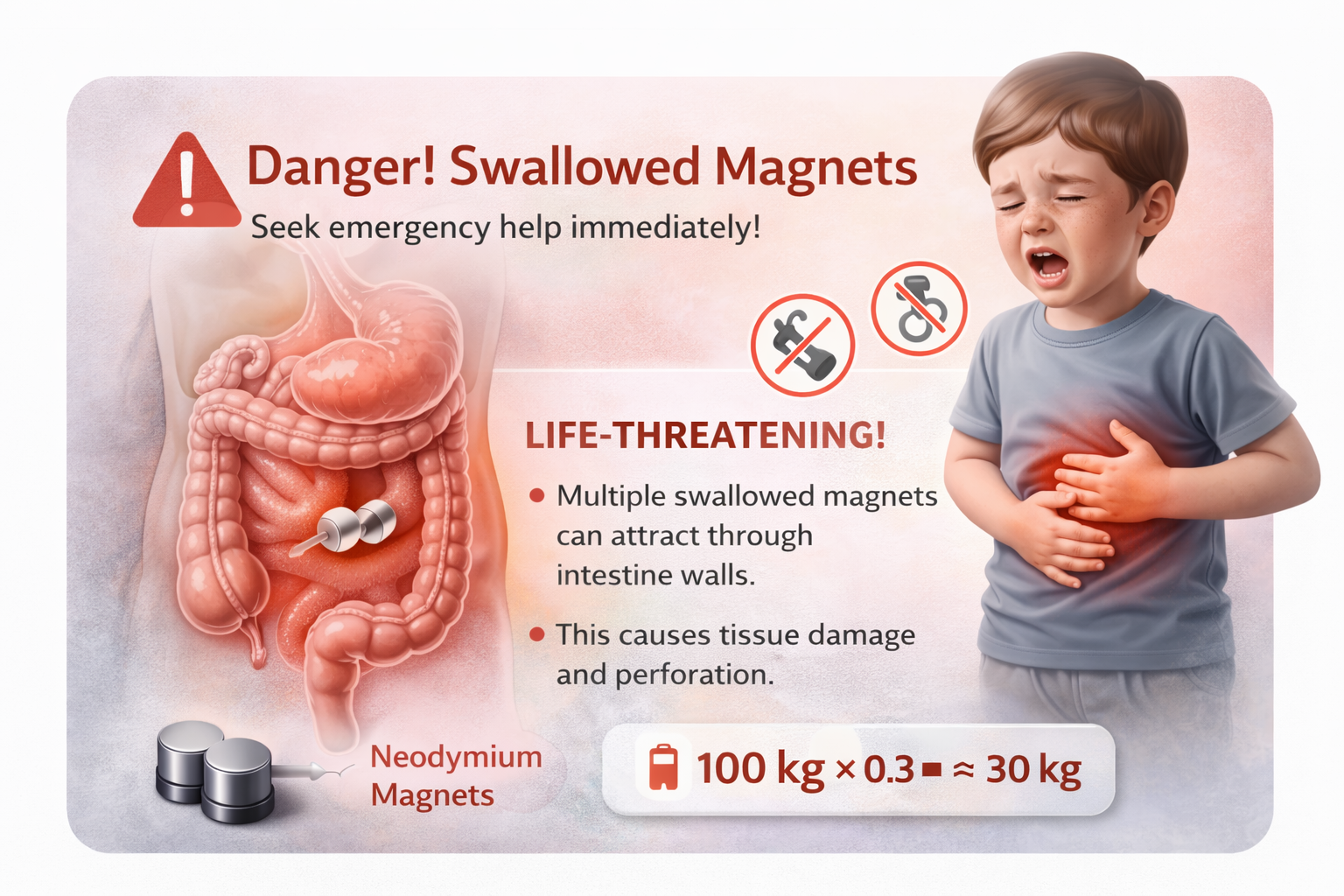
No – neodymium magnets are not safe for children and should never be used as toys.
Because of their extremely strong attraction and small size, they pose a serious risk of internal injury, finger pinching, eye damage, and life-threatening intestinal perforation if swallowed.
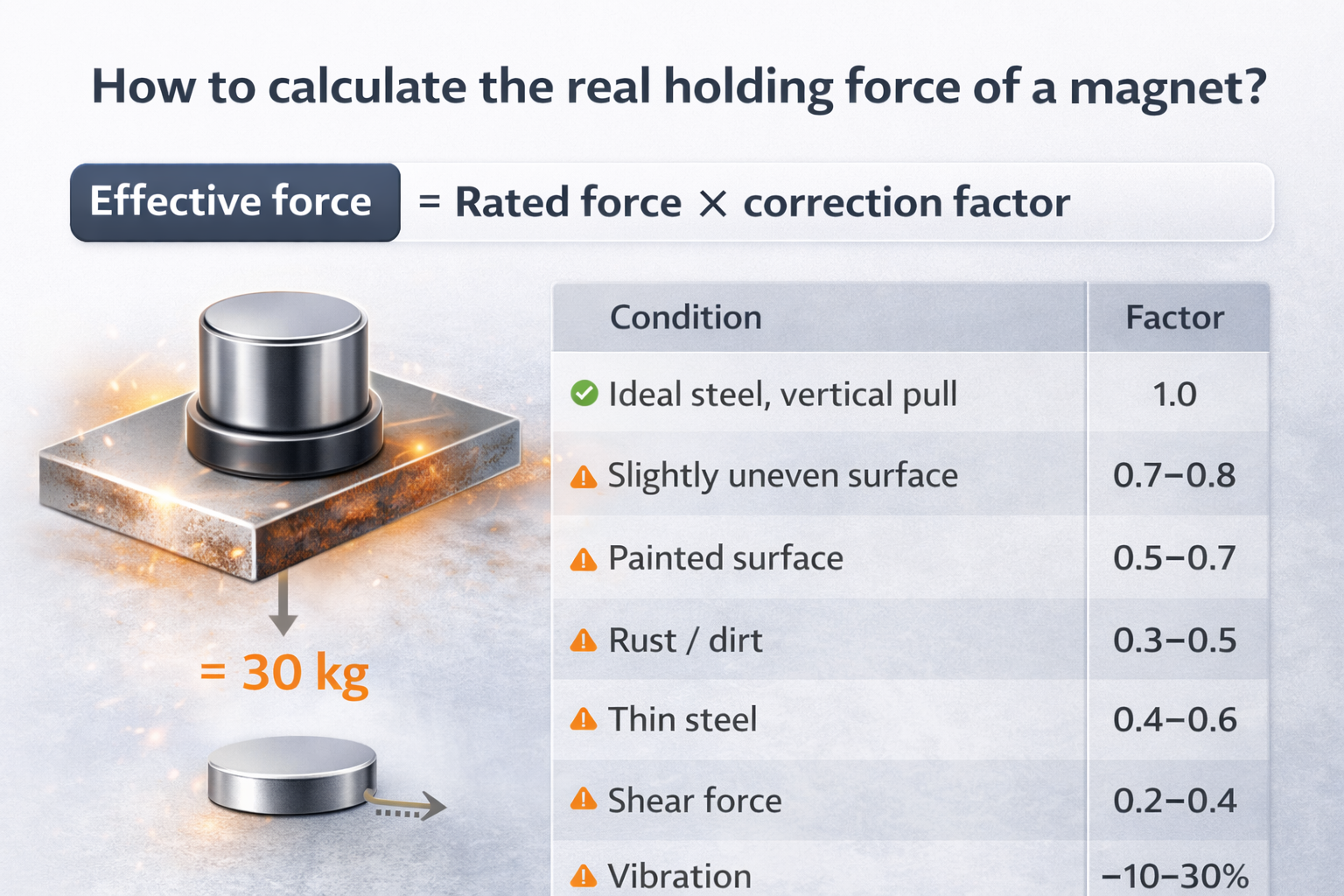
The real holding force of a magnet is always lower than the rated value.
To estimate it, you must apply correction factors for surface condition, direction of force, air gap, temperature, and magnet design. In real applications, effective holding force is typically 30–70% of the rated force.
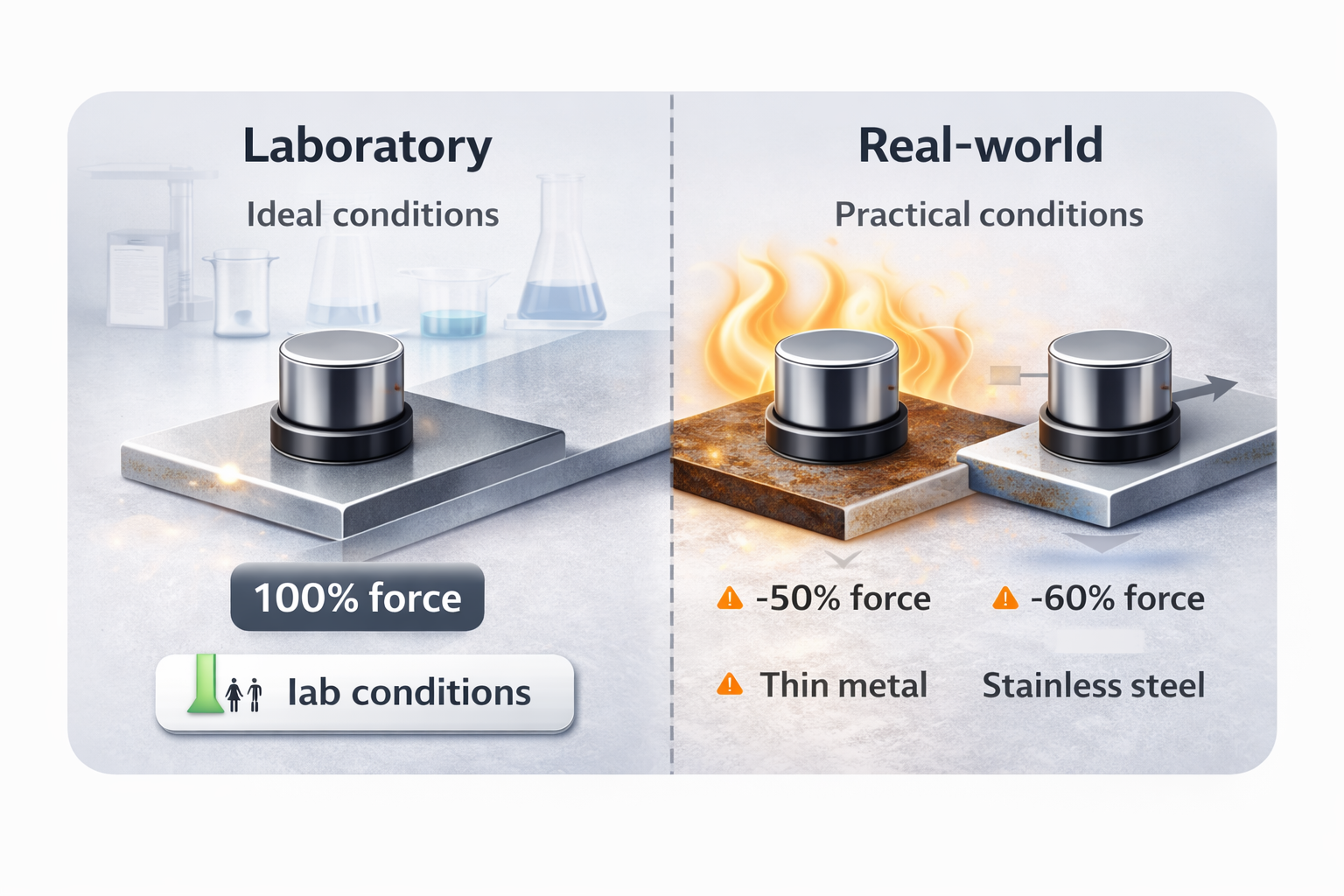
A neodymium magnet usually performs exactly as described — but the description refers to laboratory conditions.
In real-world use, holding force depends on surface quality, direction of force, air gap, temperature, and magnet design. Each of these factors can significantly reduce effective holding strength.
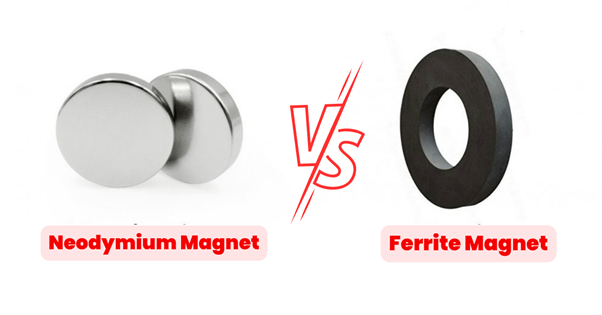
No – a bigger magnet is not always stronger.
Magnetic strength depends on material grade, magnet design, steel housing, and working conditions, not just physical size. In many cases, a smaller neodymium magnet can be stronger than a larger magnet made from a weaker material.
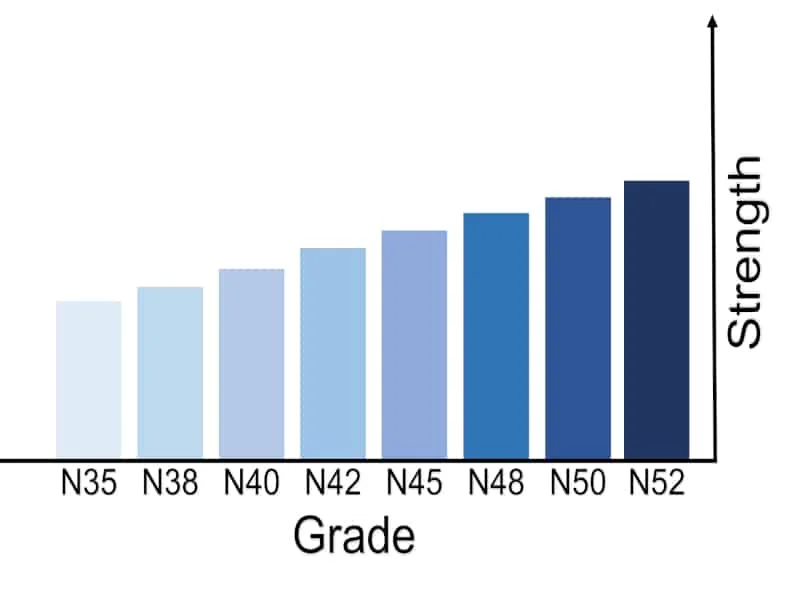
N42 and N52 are neodymium magnet grades that describe magnetic energy density, not overall quality.
In practice, an N52 magnet is about 20–25% stronger than an N42 magnet of the same size, but this difference is not always necessary for everyday applications.
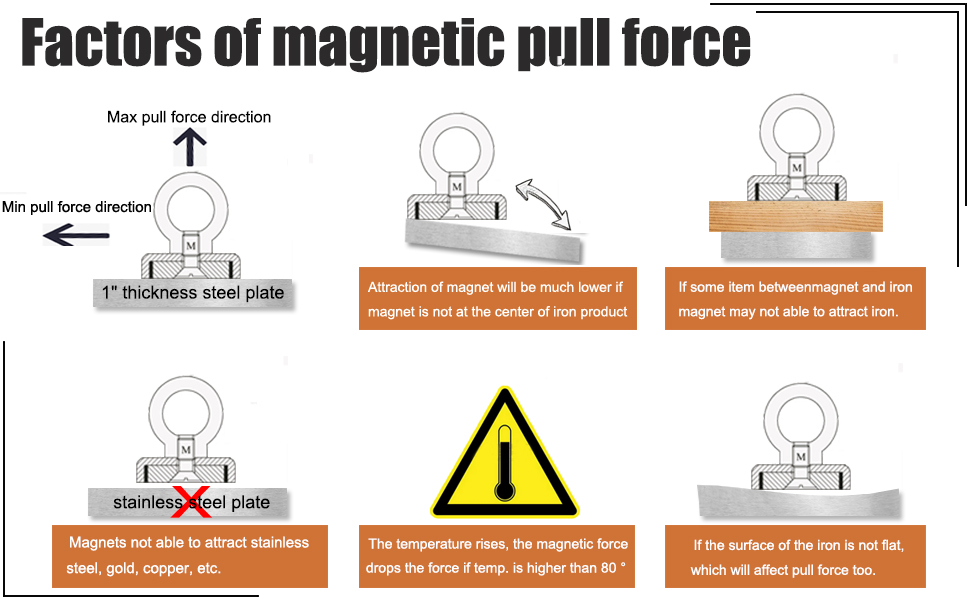
To reliably hold 10, 20, or 50 kg, a neodymium magnet must have a rated pulling force significantly higher than the actual load.
In practice, a safety factor of 2–3× is recommended, as rated pulling force is measured under ideal laboratory conditions.

Yes, a standard neodymium magnet can operate up to approximately 80°C. Exceeding this temperature may cause permanent loss of magnetic strength.
For higher temperatures, high-temperature grades such as H or SH should be used.


